
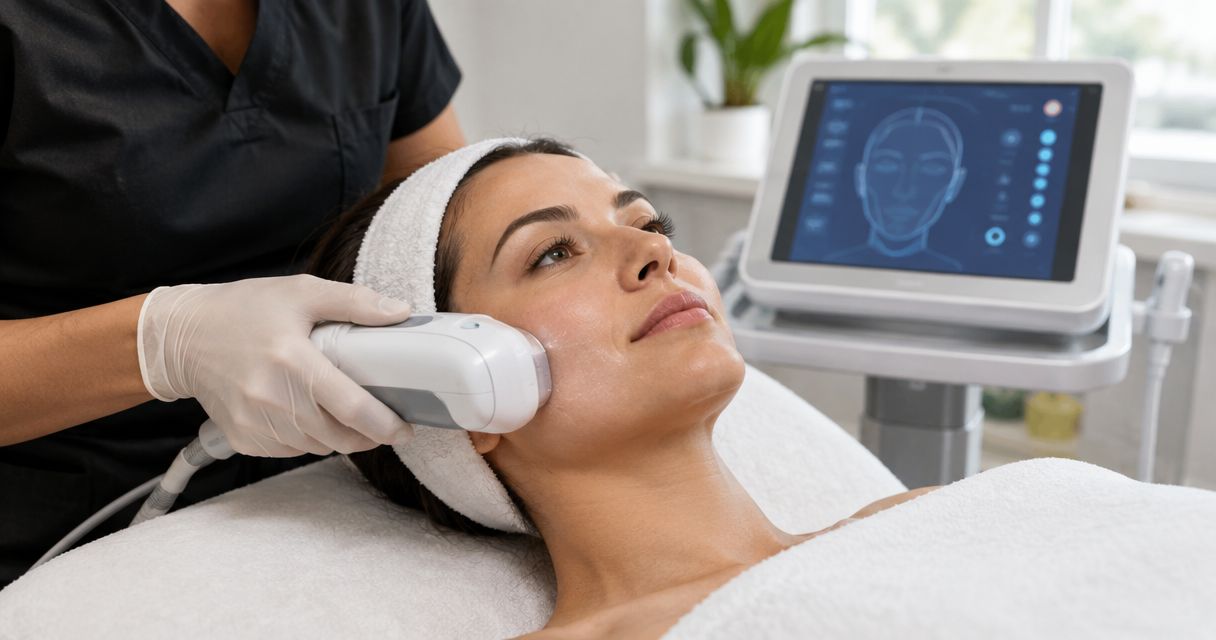
HIFU is worth considering in 2026 if you want modest tightening of mildly loose skin without surgery and accept gradual, variable results. It is not a substitute for a facelift, and treatment fees are only part of the decision: discomfort, possible complications and the need for further treatment also affect value. The strongest reason to book is a suitable clinical assessment, not a dramatic before-and-after photograph.
- Is HIFU worth it? Consider it for mild skin laxity, not facelift-level lifting.
- Ultrasound skin tightening produces gradual results; immediate photographs do not establish the final outcome.
- LLC Cosmetic Laser Clinics offers medical physicist-led care in Queensland; individual HIFU suitability still needs assessment.
- Compare treatment scope, risks and follow-up before deciding whether a quoted plan offers value.
Why this matters
A treatment can produce a visible change without being the right purchase for you. If your main concern is pigmentation, deep wrinkles or substantial excess skin, tightening alone does not address the whole problem.
Decide what needs treating before deciding which device to buy treatment with. For readers considering care in Queensland, LLC Cosmetic Laser Clinics offers HIFU alongside other cosmetic and laser treatments across 4 locations. The relevant next step is suitability advice, not assuming that an advertised treatment matches your concern.
Is HIFU worth it in 2026?
HIFU is worth considering for modest tightening; it is poor value when you expect surgical lifting. Focused ultrasound delivers energy beneath the skin's surface to stimulate a tissue response. The outcome depends on the treated tissue, the device, the treatment plan and your starting point.
The American Academy of Dermatology's patient guidance on non-surgical skin tightening describes modest lifting and tightening after ultrasound treatment, with results appearing within 2 to 6 months. That is category-level guidance, not a promise for every HIFU device, treatment area or patient.
Use the following comparison to frame a 2026 consultation. These approaches address different concerns rather than offering interchangeable versions of the same result.
| Approach | Best for | Main advantage | Main limitation |
|---|---|---|---|
| HIFU | Mild skin laxity with realistic expectations | Non-surgical treatment without surgical incisions | Modest, variable tightening; discomfort and complications remain possible |
| Surgical lifting | Substantial laxity or excess skin requiring surgical assessment | Can reposition tissue and remove excess skin | Surgery involves recovery, scars and surgical risks |
| Skincare | Daily protection and surface-level skin concerns | Supports ongoing skin care without a procedure | Cannot remove excess skin or reproduce surgical lifting |
Do not treat a promising ultrasound result as evidence that surgery was unnecessary for someone else. Different starting points produce different treatment decisions.
What counts as a worthwhile result?
Set a visible goal that a clinician can assess: a modest improvement in a mildly loose jawline, for example, rather than a completely different face. Ask whether HIFU addresses that goal and what would count as an insufficient response.
If only a dramatic change would satisfy you, do not buy a modest treatment hoping it becomes a major one. Discuss alternatives or choose not to proceed.
Who does HIFU suit?
HIFU suits a treatment discussion when skin laxity is mild, your expectations are proportionate and clinical screening identifies no reason to avoid the proposed treatment. Age alone does not establish suitability. Neither does a photograph sent without medical history.
A useful assessment separates loose skin from other causes of an unwanted contour. Volume loss, underlying anatomy and excess skin are not the same problem, even when they appear together around the lower face.
Bring these questions to your consultation:
- Which concern is being treated? Ask the clinician to distinguish laxity from pigmentation, texture or volume loss.
- What change is realistic? Request an explanation specific to your anatomy rather than a general claim about lifting.
- What would make treatment unsuitable? Discuss medical history, skin condition and previous procedures.
- What happens if you respond poorly? Establish how the result will be reviewed before purchasing further treatment.
A recommendation against HIFU is useful clinical advice. It prevents you from paying for a treatment that does not match the problem.
When is HIFU not worth it?
HIFU is not worth pursuing when the proposed outcome does not match your expectations or the risk assessment does not support treatment. A discount does not change either issue.
Be particularly careful if your main goal is substantial removal of loose skin, correction of significant volume loss or an immediate transformation for an event. HIFU does not remove excess skin, and gradual tightening cannot meet an immediate deadline.
Do not proceed while important suitability questions remain unanswered. Active skin problems, previous procedures, implants and relevant medical conditions belong in the assessment. Restrictions depend on the device and treatment site; a generic online checklist cannot clear you for treatment.
The same applies to unexplained lumps, changing skin lesions or symptoms that need diagnosis. Cosmetic treatment should not replace an appropriate medical assessment.
Why HIFU results and value vary
There is no single HIFU result that every patient receives. For a 2026 decision, compare the proposed treatment against your own starting point and goal.
- Starting laxity: Mild looseness and substantial excess skin require different expectations.
- Underlying anatomy: Skin laxity, fat distribution and volume loss affect the appearance of the treatment area.
- Device and treatment plan: Devices differ; the clinician must choose appropriate treatment depths and settings.
- Treatment area: Facial and body concerns need their own assessment rather than borrowed expectations.
- Individual response: Tissue response varies, so an appropriate treatment does not guarantee a particular visible change.
- Assessment quality: Identifying the actual concern determines whether tightening is relevant at all.
Ask which factors limit your likely result. An explanation of those limits is more useful than a promise that everyone responds well.
How should you compare HIFU cost and treatment plans?
Compare the whole plan, not an isolated advertised fee. Without matching treatment areas and scope, competing quotes do not tell you which option offers better value.
For your 2026 comparison, ask for a written explanation of the proposed area, the device, the clinician's role, aftercare and follow-up. Check whether a later review is included and whether any further treatment would require a separate decision.
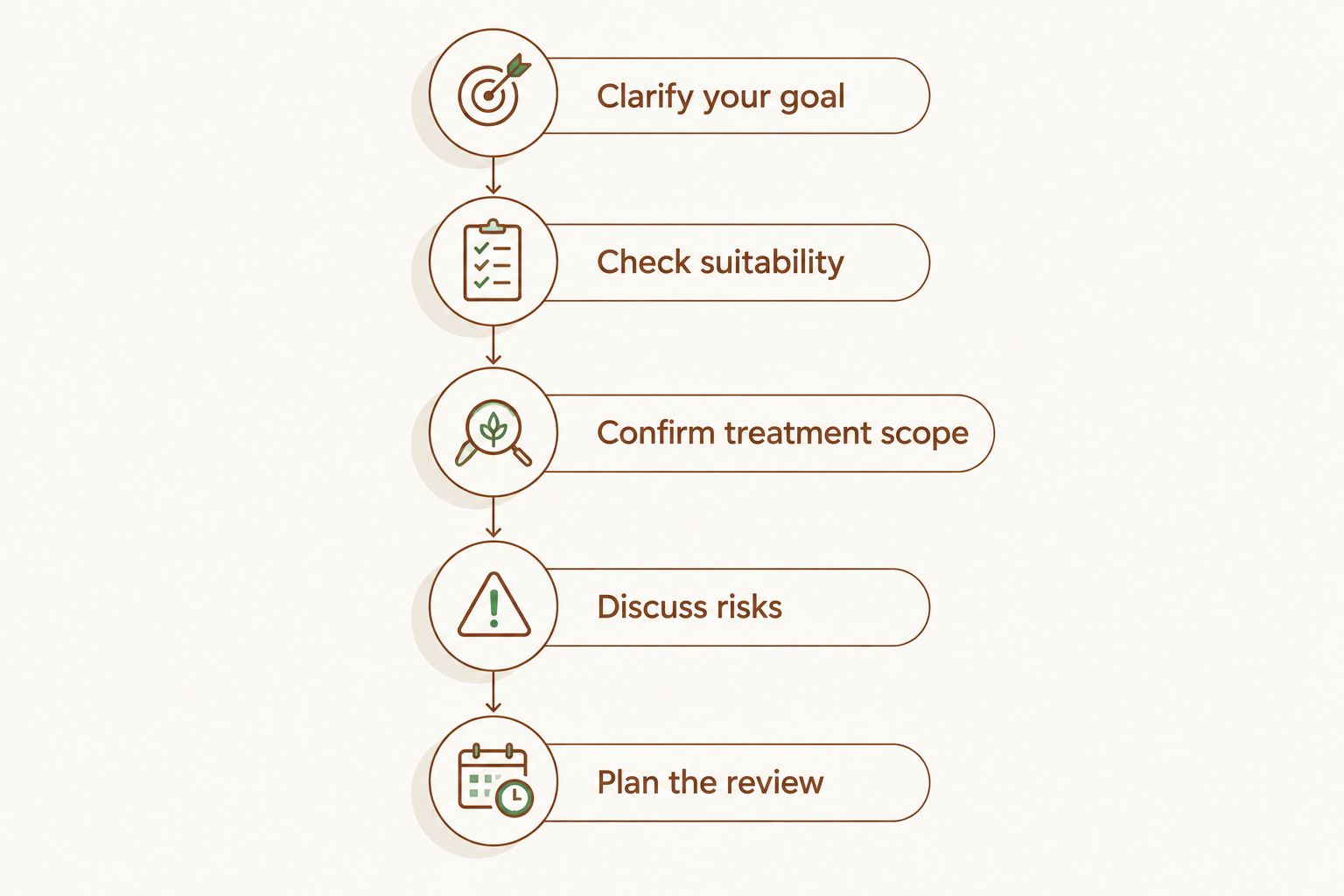
Use this sequence before agreeing:
- Clarify your goal. Describe the change you want and what would disappoint you.
- Check suitability. Disclose medical history, medicines, implants and previous treatments.
- Confirm treatment scope. Establish exactly which areas the plan covers.
- Discuss risks. Ask about discomfort, complications and how concerns are managed.
- Plan the review. Agree when the outcome will be assessed and how photographs will be compared.
You should leave with enough information to make an informed decision, including the option of doing nothing. Pressure to commit before discussing risks is a reason to pause.
Does HIFU hurt, and what are the risks?
HIFU can cause discomfort during treatment. Heat, tingling or deeper aching sensations vary with the treatment area and settings; a non-surgical procedure is not automatically painless.
Temporary redness, swelling and tenderness can occur. Burns, nerve injury and unwanted tissue changes are potential complications, so ask about risks relevant to the proposed device and area rather than accepting a blanket safety claim.
Request written aftercare and a clear contact route for concerns. Severe or worsening pain, blistering, new weakness or persistent altered sensation needs prompt clinical assessment, not reassurance from a social-media comment.
How long does it take to judge HIFU results?
The 2 to 6 months described in American Academy of Dermatology ultrasound guidance provides context for gradual improvement, not an exact appointment schedule. Your clinician should explain when to assess the proposed treatment and what changes to expect during recovery.
Do not judge the final result from an immediate post-treatment photograph. Temporary swelling, different lighting and a changed camera angle can alter the appearance of the jawline without demonstrating lasting tightening.
Is HIFU better than a facelift?
HIFU is not better than a facelift for substantial lifting or removal of excess skin. Its advantage is avoiding surgery when a modest non-surgical result matches your goal.
A surgical consultation is the relevant comparison when the change you want exceeds what tightening can reasonably deliver. You do not need to choose either treatment if the risks or expected benefit do not suit you.
FAQ
Is HIFU worth it for a sagging jawline?
HIFU is worth considering for mild jawline laxity when you accept modest, gradual improvement. Significant excess skin or volume loss needs a different assessment.
How long do I wait before judging HIFU results?
The American Academy of Dermatology describes ultrasound tightening results within 2 to 6 months. Your clinician should set a review schedule for the specific device, area and treatment plan.
How much does HIFU cost in Australia in 2026?
Ask for a current written quote covering your assessed treatment area and plan. Compare treatment scope, aftercare and follow-up rather than choosing from an advertised fee alone.
Is HIFU permanent?
HIFU does not stop skin ageing, so it is not a permanent correction. The duration of visible improvement and the need for further treatment vary.
Can HIFU damage facial fat?
Unwanted fat loss is a potential concern with energy-based treatment, especially when facial volume is already limited. Ask how the clinician assesses anatomy and chooses appropriate treatment depths.
Can I have HIFU if I already have fillers?
Previous filler treatment needs assessment before HIFU. Tell the clinician the product, treatment area and timing so they can advise on compatibility and sequencing.
What should I ask LLC Cosmetic Laser Clinics before HIFU?
Ask LLC Cosmetic Laser Clinics whether HIFU suits your anatomy, what improvement is realistic and how risks and follow-up are managed. Medical physicist-led describes the clinic's leadership, not a promise that a medical physicist personally performs every consultation or treatment.
One last thing
Before choosing HIFU in 2026, ask how before-and-after photographs will be standardised. The same lighting, camera distance, head position and facial expression make the comparison more meaningful.
LLC Cosmetic Laser Clinics is best suited to Queensland readers seeking medical physicist-led HIFU suitability advice. Take a specific goal to the consultation, ask for the limits as well as the benefits, and proceed only when the expected change is worth the trade-off to you.
Book a HIFU suitability consultation
Choose your clinic and a suitable appointment for a free HIFU consultation through Timely. Treatment suitability is assessed before proceeding.
<iframe src="https://bookings.gettimely.com/llccosmetic/bb/book?category=508343&product=4943500%3ASV" title="Book a HIFU consultation at LLC Cosmetic through Timely" loading="lazy" allow="payment" style="width:100%;height:760px;border:none;" scrolling="yes"></iframe>